

A $425,000 home purchase in Short Pump with 10% down creates a $382,500 loan. At 6.75% on a 30-year fixed, principal and interest runs about $2,481 a month. At 6.25%, that drops to about $2,356 – a savings of roughly $125 monthly, or $7,500 over five years before tax effects. That is why choosing the right short pump mortgage broker matters more than most borrowers realize.
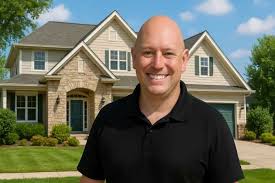
By Duane Buziak, Mortgage Maestro, NMLS#1110647
If you are buying near Short Pump Town Center, moving west toward Goochland, or refinancing in western Henrico, the difference between one broker and another usually comes down to three things – pricing, loan fit, and execution. Rate matters, but so do lender fees, appraisal timing, reserve requirements, how self-employment income is treated, and whether your credit gets protected during early shopping.
What a short pump mortgage broker actually does
A short pump mortgage broker shops multiple lenders instead of offering one bank’s menu. In practice, that means a borrower with W-2 income, a veteran using VA eligibility, or an investor buying a DSCR property can be matched to different underwriting boxes instead of being forced into a single institution’s rules.
That flexibility is useful in Short Pump because local price points span several borrower profiles. Henrico County’s median listing prices have generally tracked above the broader Richmond metro in many recent market snapshots, and western Henrico often carries higher entry costs than older Richmond neighborhoods. Public home search portals such as https://www.zillow.com/home-values/ and https://www.redfin.com/city/17043/VA/Richmond/housing-market are useful starting points for broad market context, but a broker’s job is to convert market pricing into a loan structure that actually closes.
For 2025, the baseline conforming loan limit for a one-unit property in most Virginia counties is $806,500 through the Federal Housing Finance Agency, which matters because pricing and underwriting often change once you cross into jumbo territory. Source: https://www.fhfa.gov/data/conforming-loan-limit-cll-values. In Short Pump, that threshold is relevant because move-up buyers can approach it quickly, especially in newer subdivisions and larger detached homes.
Short Pump and Henrico numbers borrowers should know
Short Pump is not its own county, so local mortgage decisions usually map to Henrico County data. Henrico’s median sales prices have commonly landed in the upper $300,000s to mid-$400,000s depending on source period, while pockets around Short Pump often price higher due to school demand, newer housing stock, and proximity to major retail and employment corridors.
For a practical benchmark, a purchase around $450,000 with 5% down means a $427,500 base loan. On conventional financing, many lenders want a 620 minimum score, but better pricing often starts around 680 and improves again at 720-plus. FHA can allow scores as low as 580 with 3.5% down in many cases, subject to full underwriting. VA loans do not publish a government minimum score, yet many lenders apply overlays around 580 to 620. Official VA program guidance is here: https://www.va.gov/housing-assistance/home-loans/.
Reserve requirements depend on occupancy and loan type. A standard owner-occupied conforming purchase may require no post-closing reserves at all. A jumbo loan might require 6 to 12 months of liquid reserves. A DSCR investor loan can also require 3 to 12 months depending on leverage, credit, and property type. That is one reason a low advertised rate does not always mean an easier approval.
Closing costs in this market often fall around 2% to 5% of the loan amount, depending on discount points, title charges, taxes, and escrows. On a $400,000 loan, that can mean roughly $8,000 to $20,000. If one lender looks cheaper on rate but is charging 1.5 points, the comparison is incomplete.
How to compare a short pump mortgage broker
The cleanest way to compare brokers is to hold the scenario constant – same purchase price, same down payment, same credit score, same occupancy, same lock period, same reserve picture. Without that, quotes are noise.
| Comparison point | What to ask | Why it matters | |—|—|—| | Rate structure | Is this rate locked or floating? Are points included? | A low rate may cost thousands upfront | | Lender fees | What are underwriting, processing, and broker fees? | Fee stacks vary more than borrowers expect | | Loan options | Conventional, FHA, VA, USDA, jumbo, DSCR, bank statement, non-QM? | Product depth helps when income is not simple | | Credit approach | Is soft-pull prequalification available? | Early shopping should not damage credit unnecessarily | | Turn times | How fast are appraisal, underwriting, and clear-to-close? | Speed matters in competitive offers | | Overlay risk | What score, DTI, and reserve overlays apply? | Some lenders are stricter than agency rules |
Large retail lenders such as Rocket can be fast and polished, but they may not always be the cheapest fit for local edge cases. Veterans United is highly visible for VA lending, yet borrower experience can still depend on pricing, local communication, and how quickly issues get escalated. Regional names such as Atlantic Coast, Alcova, NFM, Movement, C&F, CMG, CrossCountry, Freedom, and CapCenter each have strengths, but product fit and fee structure are rarely uniform across all borrower types. A self-employed borrower with one strong bank-statement option may be approved faster through a broker channel than through a retail lender with tighter overlays.
Which loan types make sense in Short Pump
Conventional loans tend to work well for borrowers with solid credit, predictable income, and down payments from 3% upward. If your score is 740 and your debt-to-income ratio is modest, conventional often wins on long-term mortgage insurance economics.
FHA can make sense if credit is recovering or the down payment is tight. The trade-off is mortgage insurance structure. FHA is not automatically cheaper just because the down payment requirement is lower.
VA is often the strongest option for eligible veterans and active-duty borrowers because it can offer no down payment and no monthly mortgage insurance. The funding fee and residual income analysis still matter, and seller concessions can help offset cash needed at closing. Official FHA resources are available at https://www.hud.gov/buying/loans.
For borrowers with tax returns that understate income, bank-statement and non-QM programs can bridge the gap. These usually require stronger down payments, higher scores, or larger reserves. For investors, DSCR loans focus more on rental income than personal income documentation, which can be useful in Richmond-area rental strategies if the property cash flows.
A 6-step roadmap to choosing the right broker
- Start with a soft-pull prequalification so you can gauge payment, DTI, and price range without unnecessary credit impact.
- Set one exact scenario – purchase price, down payment, credit score, property type, and occupancy – and use that same scenario for every quote.
- Ask for the full cost stack, including points, lender fees, title estimates, escrows, and cash-to-close.
- Match the loan program to your income type. W-2, self-employed, veteran, investor, and jumbo borrowers should not be compared on the same assumptions.
- Pressure-test execution. Ask how long appraisal, conditional approval, and clear-to-close are taking right now in Henrico and nearby counties.
- Review reserves and documentation early, especially if the target home price pushes close to conforming limits or if you are using bonus, commission, bank-statement, or rental income.
FAQ about using a short pump mortgage broker
Is a broker cheaper than a bank?
Sometimes yes, sometimes no. Brokers can access wholesale pricing and more loan menus, but the only fair answer comes from a line-by-line loan estimate comparison.
What credit score do I need?
Many conventional loans start around 620, FHA often around 580, and VA overlays commonly start near 580 to 620 depending on lender. Better pricing usually begins at higher score bands.
Are jumbo loans common in Short Pump?
They can be. With a 2025 conforming limit of $806,500 in most Virginia counties, larger move-up purchases may still stay conforming, but higher-end homes can cross into jumbo quickly.
How much cash should I expect at closing?
Beyond down payment, many buyers should plan for 2% to 5% of the loan amount in closing costs, prepaid taxes, and insurance, subject to seller credits or lender credits.
Can self-employed borrowers still qualify well?
Yes, but the path may be different. Standard conventional underwriting uses tax return income, while bank-statement and non-QM programs may work better for some borrowers.
Does shopping hurt my credit?
A soft-pull prequalification can help early. When hard inquiries are needed, mortgage shopping within a focused time window is typically treated more favorably by scoring models than borrowers fear.
Should I choose the lowest rate quote?
Not automatically. The better question is lowest total cost for your timeframe, especially if one quote requires points and another does not.
The strongest broker relationship is not the one with the flashiest rate sheet. It is the one that explains the trade-offs clearly, prices the loan honestly, protects your credit while you shop, and closes on the timeline your contract demands.
This article is for educational purposes only and does not constitute financial or legal advice.
Duane Buziak, Mortgage Maestro | NMLS: 1110647 | Licensed VA/TN/GA/FL | VA Broker of the Year 2024-2025 | Top 1% Nationwide | Coast2Coast Mortgage | (804) 212-8663.

